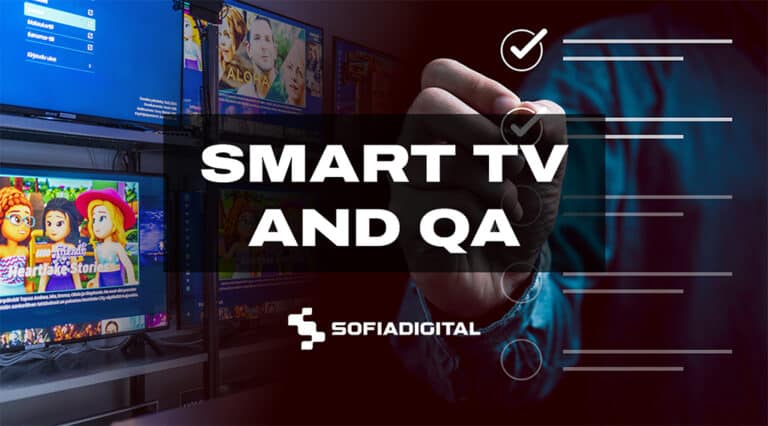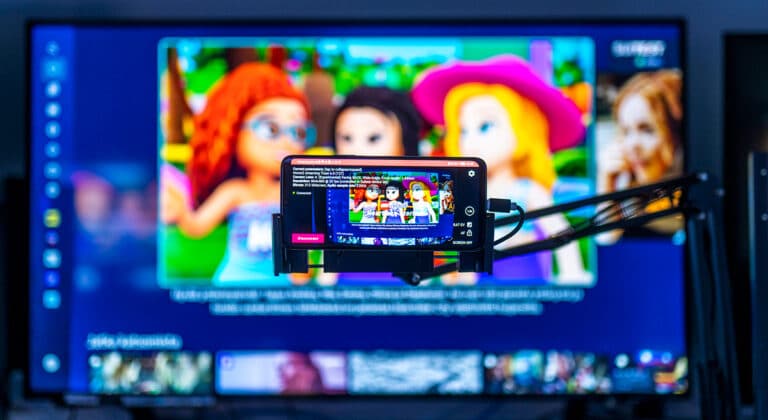
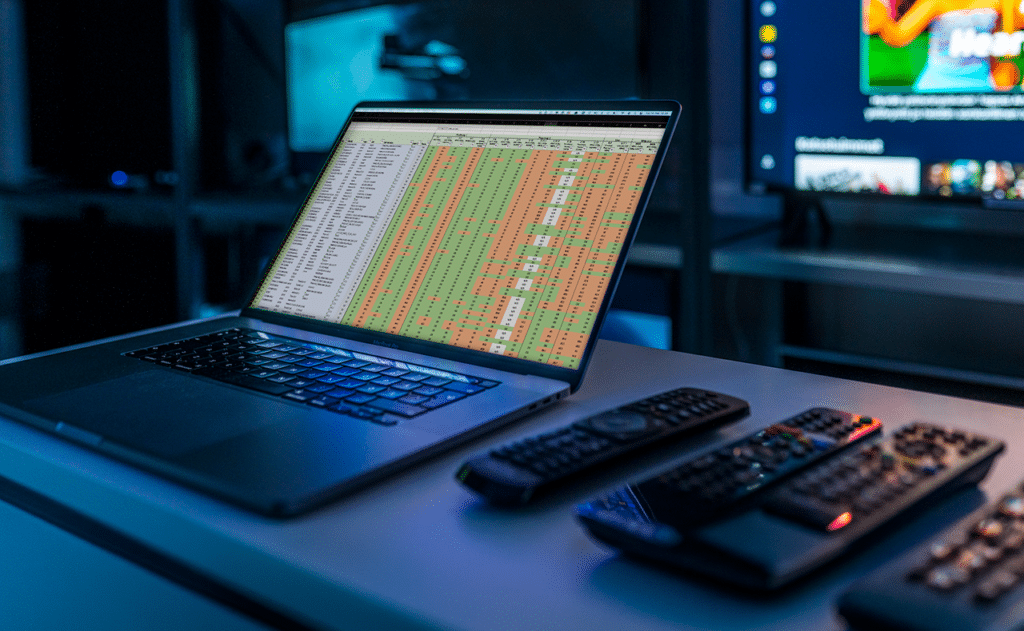
Testing Smart TV and HbbTV applications presents unique challenges and differs significantly from web and mobile app testing. Platform-specific differences, varying device capabilities, and the lean-back viewing experience all demand thorough testing that goes beyond traditional approaches. With over 250 devices in our test laboratory and years of experience in the TV ecosystem, we’ve learned that successful TV application testing requires a strategic approach that balances manual and automated testing methods.
The Complexity of TV Application Testing
Smart TV applications operate in a complex environment with dozens of components working together, from video encoders and content management systems in the backend to big screen user-interfaces and remote navigation. Unlike web or mobile applications, TV apps must work across a highly fragmented ecosystem of proprietary platforms like Samsung Tizen, LG webOS and different variants of Android TV. Each platform has its own capabilities, limitations, unique characteristics and often very limited debugging options that developers and testers must cope with.
The hardware diversity between different brands and operating systems adds another layer of complexity. TV devices range from budget models with limited processing power to high-end sets with cutting-edge capabilities, such as voice control and advanced video codecs. Your application needs to perform well across this entire spectrum, handling various screen resolutions, performance variations and remote control interfaces. For HbbTV applications, there’s the added challenge of integrating broadcast and broadband content together and creating test scenarios that simply don’t exist in pure OTT environments.
In a lean-back environment where viewers expect seamless entertainment after a long day, stuttering playback or a crashing OTT portal can be extremely frustrating. The stakes are particularly high because a single bug in production can affect millions of viewers simultaneously, potentially damaging your brand reputation and viewer trust. This makes thorough testing essential.
Why to Automate TV Application Testing?
Test automation significantly reduces manual work and speeds up the testing and software development processes. Automated tests run faster than manual tests and can execute around the clock, allowing for continuous testing throughout the development cycle. This means bugs are caught earlier, when they’re cheaper and easier to fix, rather than discovering them after deployment when the cost of fixing increases exponentially. All these factors apply to Smart TV applications, even with bigger possible cost-savings with early issue detection, since Smart TV apps tend to have more complex release processes.
Key benefits of test automation include:
- Consistency: Automated tests perform the same steps precisely every time, eliminating human error and unwanted variability
- Scalability: Tests can be run on multiple devices simultaneously
- Speed: 24/7 execution provides rapid feedback to development teams
- Cost-effectiveness: Lower long-term testing costs through reduced manual effort
- Reliability: Creates a safety net that catches regressions before they reach production
With properly functioning test automation setup, you can execute comprehensive test suites, for example overnight, on a wide range of different devices and platforms. An overnight test run can provide results that would take weeks to generate manually.
Deciding What to Automate
The decision of what to automate requires balancing several factors. Regression testing represents an ideal candidate for automation: every time you release a new version, you need to verify that existing functionality still works correctly. Testing all the changes and new features manually on all the target platforms proves to be very time-consuming and that’s where automation can help.
In general, automation is best suited for repeatable, objective verification while manual testing shines in non-recurring tasks, subjective evaluation and creative exploration testing. Since building test scenarios for Smart TVs is more time-consuming than for traditional web or mobile environments, also the costs for developing the tests increase. Successful and cost-effective testing strategy requires balancing between automation and manual testing.
Best candidates for automation:
- Regression testing to ensure new changes don’t break existing features
- Performance testing for startup time, responsiveness and memory usage
- Stress testing under heavy load or extended use
- Cross-platform compatibility testing
- Video playback testing including stream startup times, seeking and quality changes
Testing best left to manual effort:
- User experience evaluation and interface intuitiveness assessment
- Exploratory testing to uncover unexpected issues and corner cases
- Visual design verification including contrast, fonts, and aesthetics
- Accessibility testing and compliance checks
- Context-specific scenarios and edge cases
Getting Started with Test Automation
When beginning to automate Smart TV application testing, starting small provides often provides the best chance of success. It is advisable to figure out the critical use-scenarios that represent the most important functionality for your users at first. For a video streaming app, this might be searching for content, starting playback and basic navigation within the application. Automating these most common use-cases will ensure that the core functionalities of your application work regardless of changes in the application itself or with the related backend systems.
Steps to begin with:
- Start with critical flows: Automate the most important user journeys first
- Build infrastructure: Invest in test devices representing your target platforms
- Establish processes: Define guidelines for when to automate versus test manually
- Measure results: Track metrics like bug detection rate and time-to-market to demonstrate ROI
- Train your team: Ensure engineers understand both automation tools and TV platform characteristics
Once you have a clear roadmap for getting started, it’s equally important to anticipate the challenges you’ll face along the way. Over the course of time, we have recognized several factors that often prove to be the biggest difficulties with Smart TV application testing. Luckily, we’ve also come up with solutions for these possible obstacles.
Key challenges and possible solutions:
- Limited APIs: Use specialized tools that provide multiple control methods when platforms lack robust APIs
- Hybrid scenarios: For HbbTV, invest in proper test infrastructure including DVB signal management systems
- Test maintenance: Write modular, reusable test code and establish clear ownership for ongoing maintenance
- Platform diversity: Focus automation on high-impact platforms and supplement with targeted manual testing
Sofia Digital’s Test Automation System
At Sofia Digital, we’ve built the testing infrastructure over the years and can provide our clients immediate access to comprehensive testing capabilities without requiring investing in their own, expensive, testing devices and facilities. Having a long history in developing and testing TV applications, we’ve developed a deep understanding on the different platforms and the features that need special attention when starting to test. With this knowledge we can help our clients to find the optimal testing strategy optimized for their application and target platforms.
Our setup combines proprietary solutions with the Suitest framework, enabling automated testing on physical devices across all major HTML5-based platforms. Our automation system provides multiple methods for device control including IR control, platform-specific APIs, and visual feedback via live streaming. The infrastructure includes:
- Support for all major Smart TV platforms and HbbTV
- Test orchestration through CI/CD pipelines for scheduling and execution
- Device control using IR emulation, platform APIs and visual recognition
- Automated test result collection, analysis and reporting
- Integration with version control and notification systems
This setup enables us to run automated tests across our 250+ device laboratory, executing regression tests on multiple platforms simultaneously and catching issues before they reach production. Complementing the automation, we provide comprehensive testing services for the entire Smart TV ecosystem:
- HbbTV API and browser testing as an official HbbTV test center
- Platform conformance testing to ensure cross-device compatibility
- Performance and stress testing under real-world conditions
- Device certification testing for market readiness
- VPN/geolocation testing by emulating different geographical locations
With specialized test infrastructure including DVB head-end systems and deep expertise across all major TV platforms, we help you deliver quality TV applications efficiently—whether you need to establish test automation, ensure platform compliance, or verify performance across device types.
Conclusion
Test automation for TV applications is essential for delivering high-quality experiences efficiently. However, successful automation requires understanding the unique challenges of the TV ecosystem, choosing the right tools, and maintaining the optimal balance between automated and manual testing.
The key is not to automate everything, but to automate strategically focusing on test cases that provide the best return on investment, while preserving manual testing for scenarios requiring human insight. Well-implemented testing helps you catch issues early when they’re cheapest to fix, which is especially important in the Smart TV ecosystem where failures can affect millions of customers concurrently.
With the right approach, test automation becomes a powerful tool that accelerates development, improves quality, and enables confident releases.
Ready to implement test automation for your TV applications?
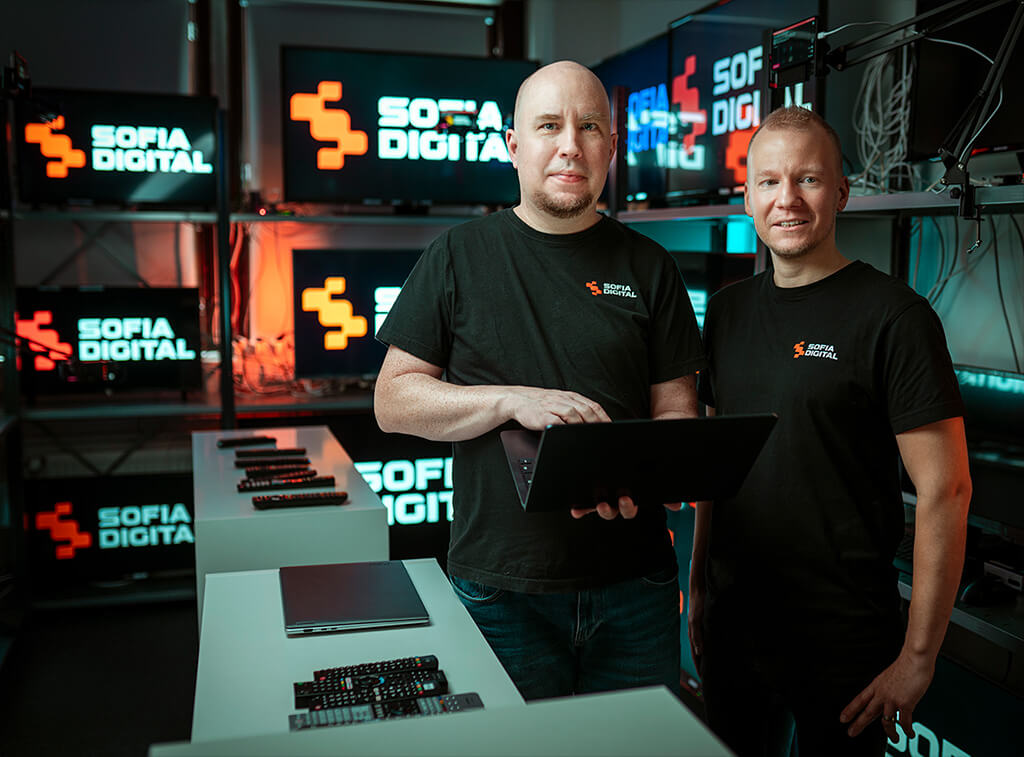
Juha Joki – director of broadcast and testing services
juha.joki@sofiadigital.com
Lasse Soininen – remote and automation testing manager
lasse.soininen@sofiadigital.com